
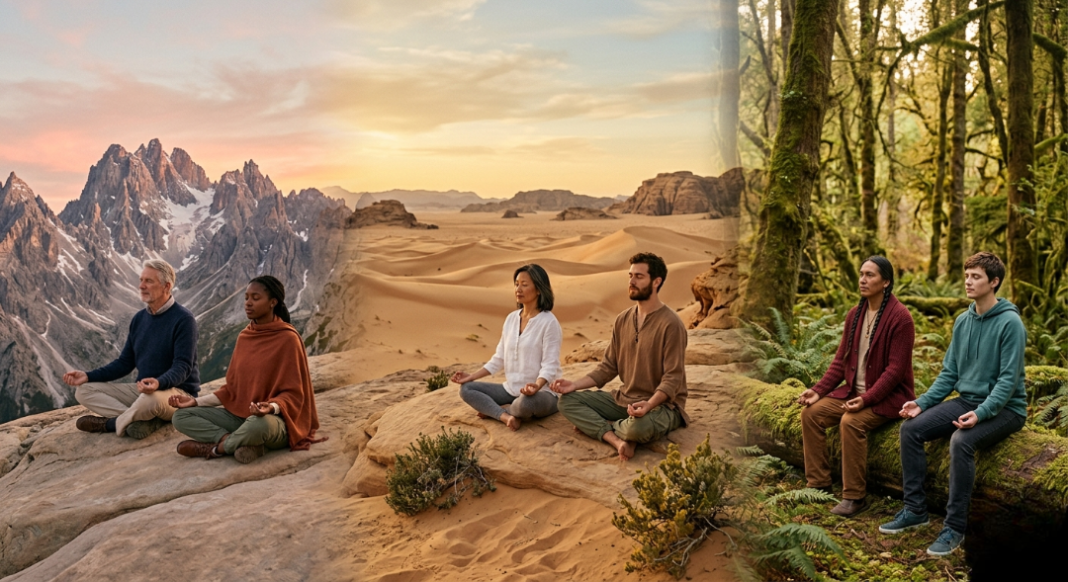

So… Soul Path Techniques Used by Spiritual Leaders Worldwide (and me, awkwardly trying them)
I’ll be honest—when I first heard about soul path techniques used by spiritual leaders worldwide, I pictured something intense.
Like… monks on mountains.
People sitting still for 12 hours.
Incense. Chanting. Probably zero Wi-Fi.
Meanwhile, I can’t even sit still for 12 minutes without checking my phone.
So yeah, I was skeptical.
But also curious.
Because clearly, these people know something about being calm and centered that the rest of us… don’t.
So I tried a few things.
Not perfectly. Not consistently. Definitely not gracefully.
But enough to notice something shift.
The Time I Tried to Meditate and Accidentally Planned My Grocery List
Let’s start here.
Meditation.
Classic, right?
I sat down, closed my eyes, took a deep breath… and immediately thought:
“Do I have eggs? I think I’m out of eggs. Also… why did I say that weird thing in 2014?”
You ever try to quiet your mind and it just… gets louder?
Yeah. Same.
But here’s the thing I learned—most spiritual leaders (like Dalai Lama) don’t expect your brain to magically shut up.
They just… notice the thoughts.
No fighting. No judging. Just:
“Oh hey, random thought about eggs. Cool. Moving on.”
That alone felt kinda revolutionary.

Technique #1: Stillness (But Like… Imperfect Stillness)
Spiritual leaders across traditions—Buddhist, Hindu, even modern teachers like Eckhart Tolle—talk about stillness like it’s this magical doorway.
And I get it now.
Not because I’ve mastered it (lol, no), but because even a few minutes of sitting quietly does something weird:
It slows everything down.
Even if your mind is running laps.
What I do (on a good day):
- Sit somewhere quiet (or semi-quiet, I’m not picky)
- Close my eyes
- Breathe
- Get distracted
- Come back
- Repeat… a lot
That’s it.
No enlightenment yet. But I do feel… less chaotic.
Technique #2: Paying Attention to the Present Moment (Sounds Obvious, Isn’t)
Okay this one annoyed me at first.
“Be present.”
Like… cool advice. Very helpful. What does that even mean?
But then I noticed something.
Most of my stress comes from:
- Thinking about the future
- Replaying the past
- Imagining conversations that haven’t happened
Rarely from what’s actually happening right now.
That’s something teachers like Thich Nhat Hanh emphasized a lot—simple awareness.
Like:
- Feeling your breath
- Noticing your surroundings
- Actually tasting your food (wild concept, I know)
I tried this while drinking coffee once.
And for like… 10 seconds, I was fully there.
No distractions. No thoughts.
Then I checked my phone.
Progress, not perfection.
Technique #3: Asking Yourself Annoyingly Honest Questions
This one hit me harder than I expected.
A lot of spiritual traditions involve self-inquiry.
Basically asking yourself questions like:
- “What do I actually want?”
- “Why am I doing this?”
- “Is this aligned with who I am?”
And yeah… uncomfortable.
I remember journaling one night and writing:
“What am I avoiding right now?”
And then just staring at the page like it personally attacked me.
But this is something even ancient teachings like those connected to Socrates talked about—knowing yourself.
Not in a deep philosophical lecture way.
More like… brutally honest, slightly awkward self-awareness.
Technique #4: Letting Go (Easier Said Than Done, Obviously)
Letting go sounds peaceful.
Until you try to actually do it.
Let go of expectations.
Let go of outcomes.
Excuse me?? I like control.
But spiritual leaders across cultures—whether it’s Buddhist teachings or even ideas from Lao Tzu—keep coming back to this.
Because holding on too tightly… kinda stresses you out.
I tested this once.
I had a plan. A very detailed plan.
And then everything went wrong.
Instead of forcing it, I just… adjusted.
Not gracefully. There was definitely some internal complaining.
But I didn’t spiral.
And that felt like growth.
Technique #5: Doing Simple Things With Meaning (This One Surprised Me)
I used to think spiritual practices had to be… big.
Like rituals or retreats or something intense.
But honestly?
A lot of spiritual leaders focus on small, meaningful actions.
- Being kind
- Helping someone
- Doing your work with care
That’s it.
Even figures like Mother Teresa emphasized simple acts done with love.
Which sounds cliché until you actually try it.
Like holding the door for someone and actually being present.
Or listening to someone without thinking about your response.
It feels… different.

Technique #6: Silence (Which Is… Uncomfortable at First)
Silence is weird.
We’re so used to noise—music, podcasts, notifications.
So when it’s quiet, it feels… off.
I tried sitting in silence once.
No phone. No music.
Just… existing.
At first, I hated it.
Then after a while, something shifted.
My thoughts slowed down. Not stopped—just… slowed.
And I realized why so many spiritual leaders value silence.
It gives you space.
Even if that space feels awkward at first.
Random Side Note (Because This Is Important)
None of these techniques made me instantly wise or peaceful.
I still:
- Overthink
- Get distracted
- Procrastinate
- Question everything
But I notice things faster now.
I catch myself mid-spiral sometimes.
Which is… progress.
The Big Thing I Learned (That I Wasn’t Expecting)
I thought soul path techniques used by spiritual leaders worldwide would be complicated.
Like something only a few people could do.
But honestly?
They’re simple.
Not easy. But simple.
- Sit quietly
- Pay attention
- Ask real questions
- Let go (a little)
- Be kind
- Embrace silence
That’s it.
No secret code. No hidden formula.
Just… practice.
Stuff I Randomly Found Helpful (Proceed With Curiosity)
- If you like honest, slightly blunt insights, check out Mark Manson (https://markmanson.net)
- And if you want something more poetic and thoughtful, The Marginalian (https://www.themarginalian.org) is worth exploring
Warning: both can send you into deep thinking spirals. You’ve been warned.